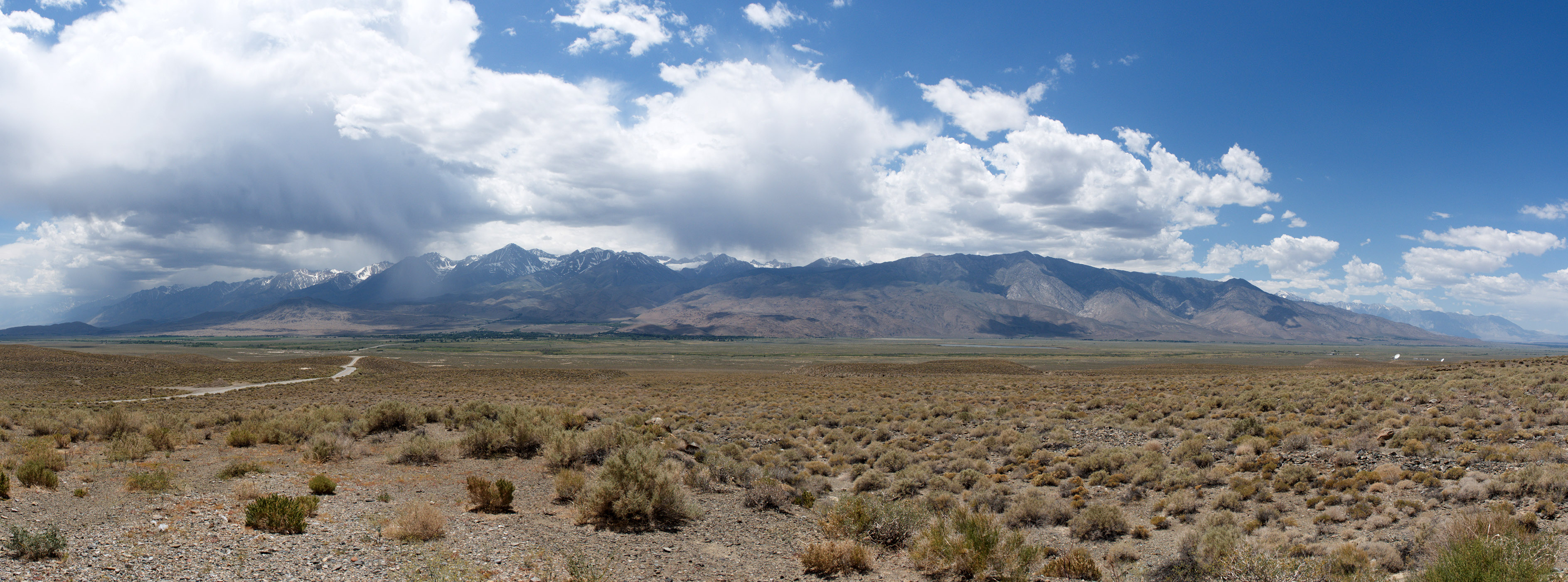
Panoramic view of the Eastern Sierra Nevada from Big Pine Vista Point. I drove from Beatty NV through Westgard Pass between the Inyo and White Mountains on CA 168 through stunning volcanic terrain before stopping at this beautiful vista point.
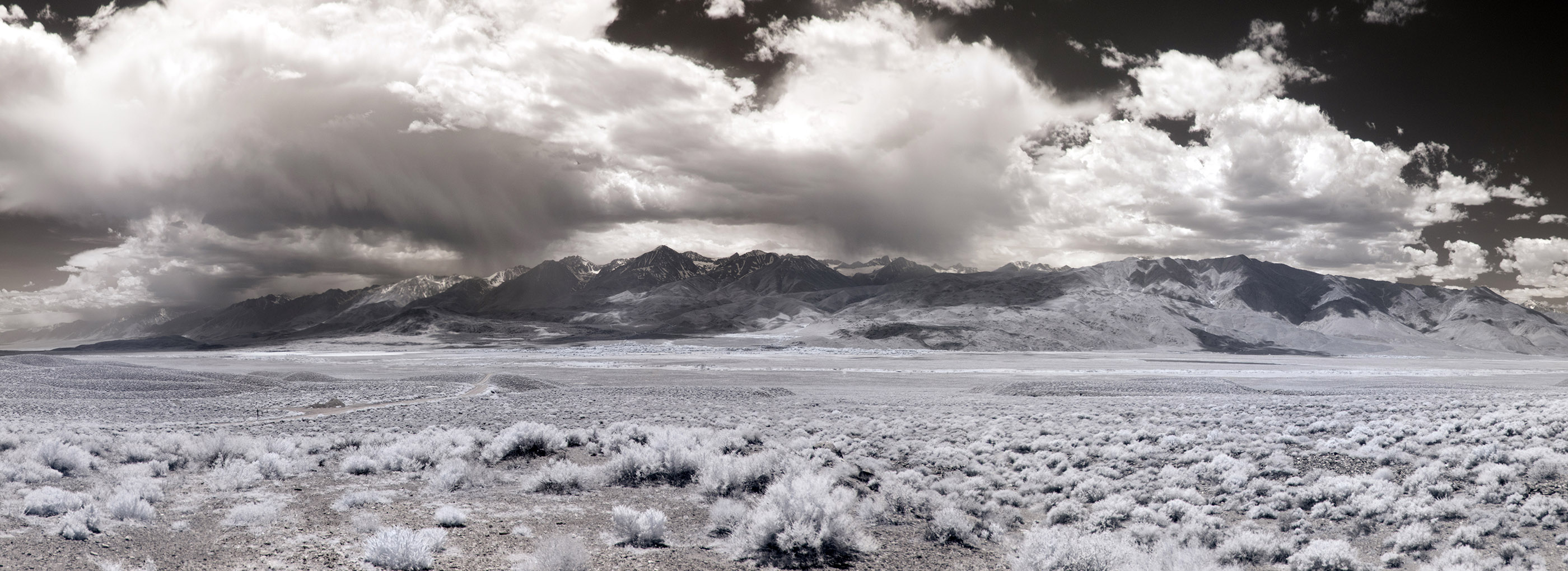 Same view as above with infrared camera. The granite core of the Sierra Nevada, or batholith formed 220 to 85 Ma when the Farallon Plate subducted below the North American plate, and the overlying crust heated to melting forming large magma pockets. Most of the magma slowly cooled to form the granite batholith (plutonic rock) estimated at 400 miles long and 60 to 80 miles wide. Erosion occurred exposing some of the granite. However, a second major event was the formation of the Sierra Nevada fault and the lifting and tilting of the eastern face westward giving an abruptly rising mountain front. There is disagreement whether this rising of the eastern face occurred over 2 or 10 Ma.
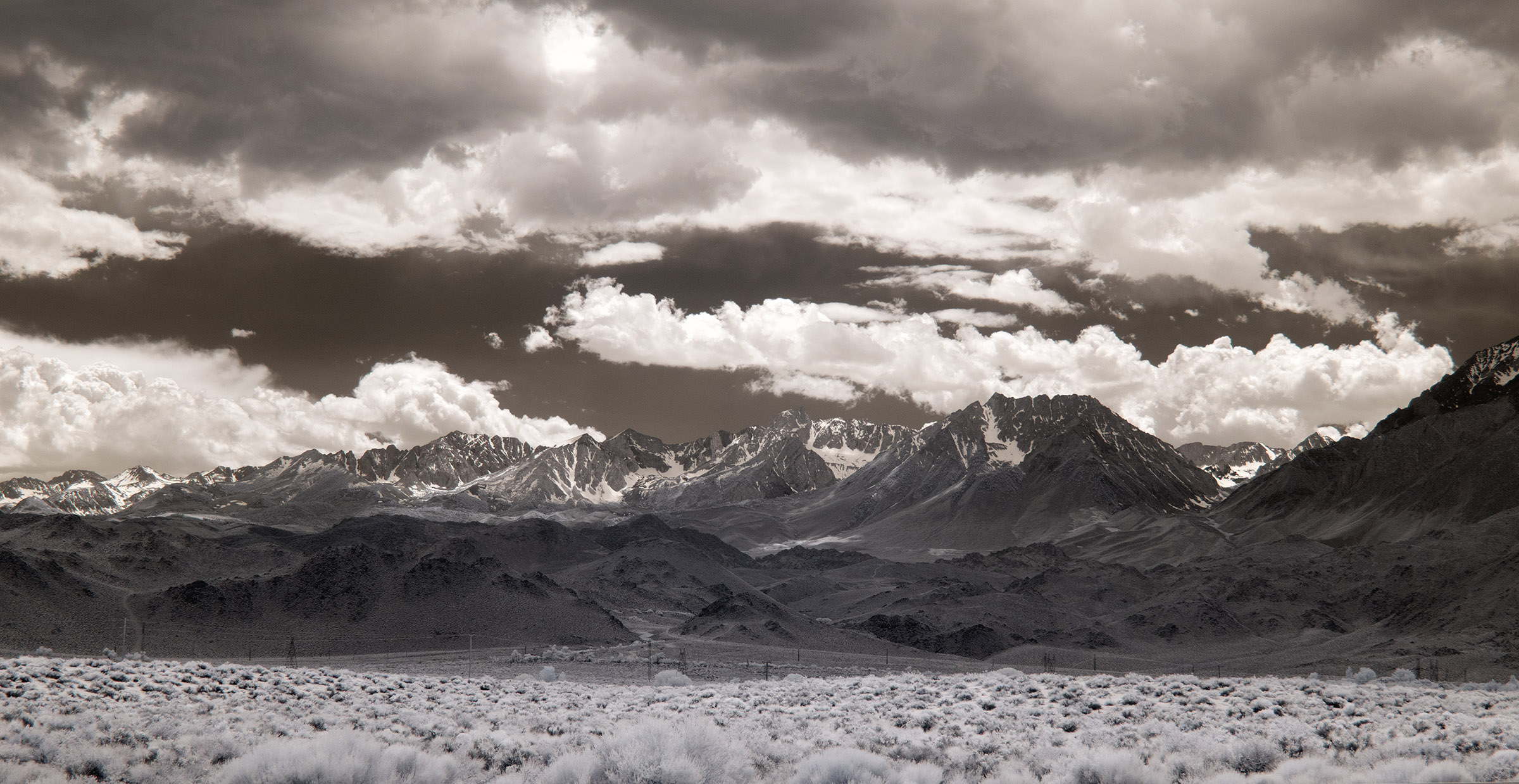 Eastern face of the Sierra Nevada along US 395 near Bishop shot with an infrared camera. A third important event in the formation of the Sierra Nevada to its current appearance was glaciation over the last 2 Ma with carving of the granite batholith and removal of most of the remaining sedimentary and metamorphic rock that covered the batholith.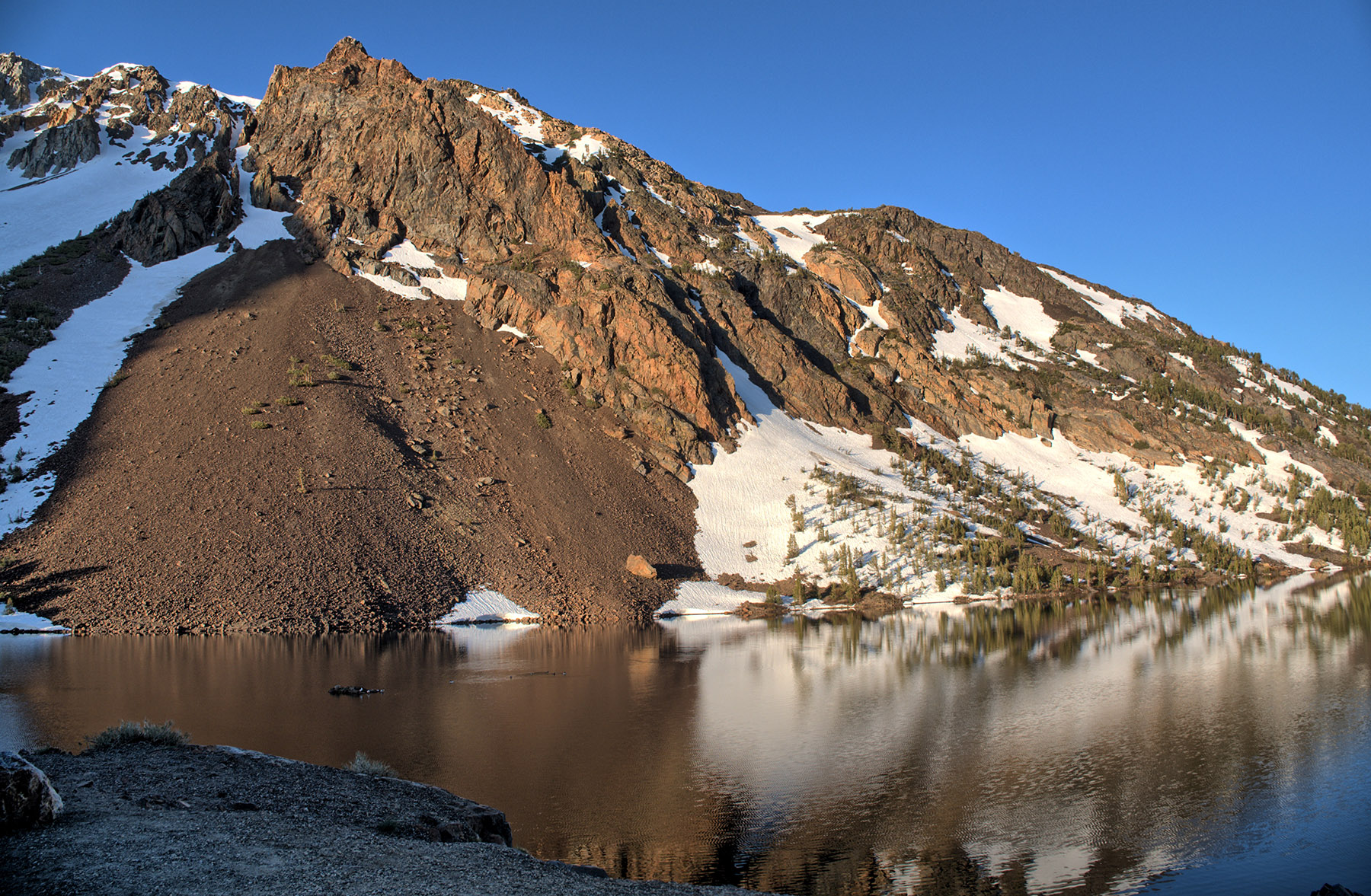
Eastern Tioga Pass at Ellery Lake. Remnants of a roof pendant (Saddlebag Roof Pendant) is shown in early morning light. This is Paleozoic metasedimentary/metavolcanic rock that covered the magma chamber that formed the batholith, and heat and pressure metamorphosed the rock. It was lifted with the batholith when the granite was lifted and was incompletely eroded over millions of years.
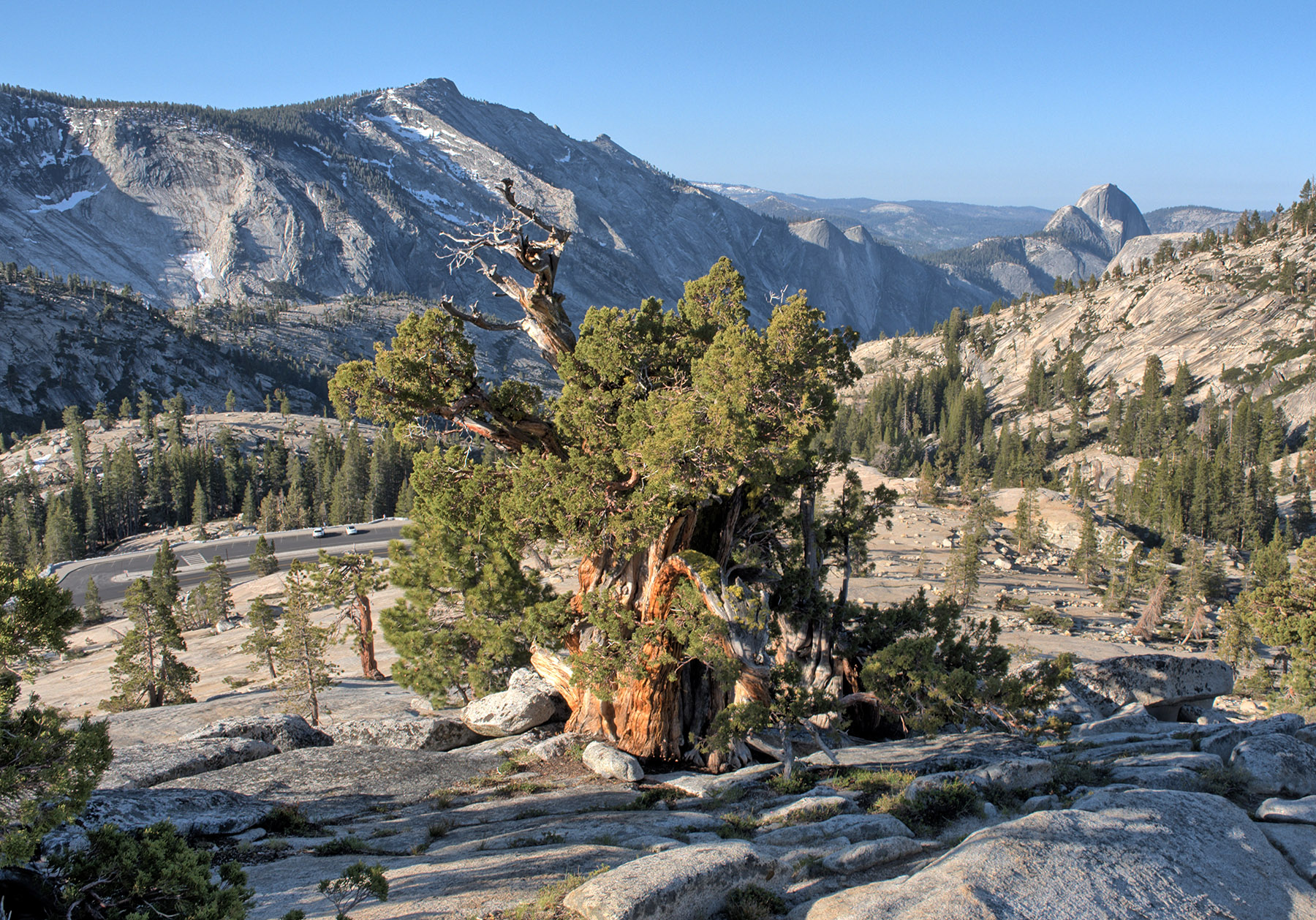 The exposed granite batholith at Olmsted Point with a Western Juniper tree growing out of the granite in the foreground and the top of Half Dome visible in the distant right of the field.
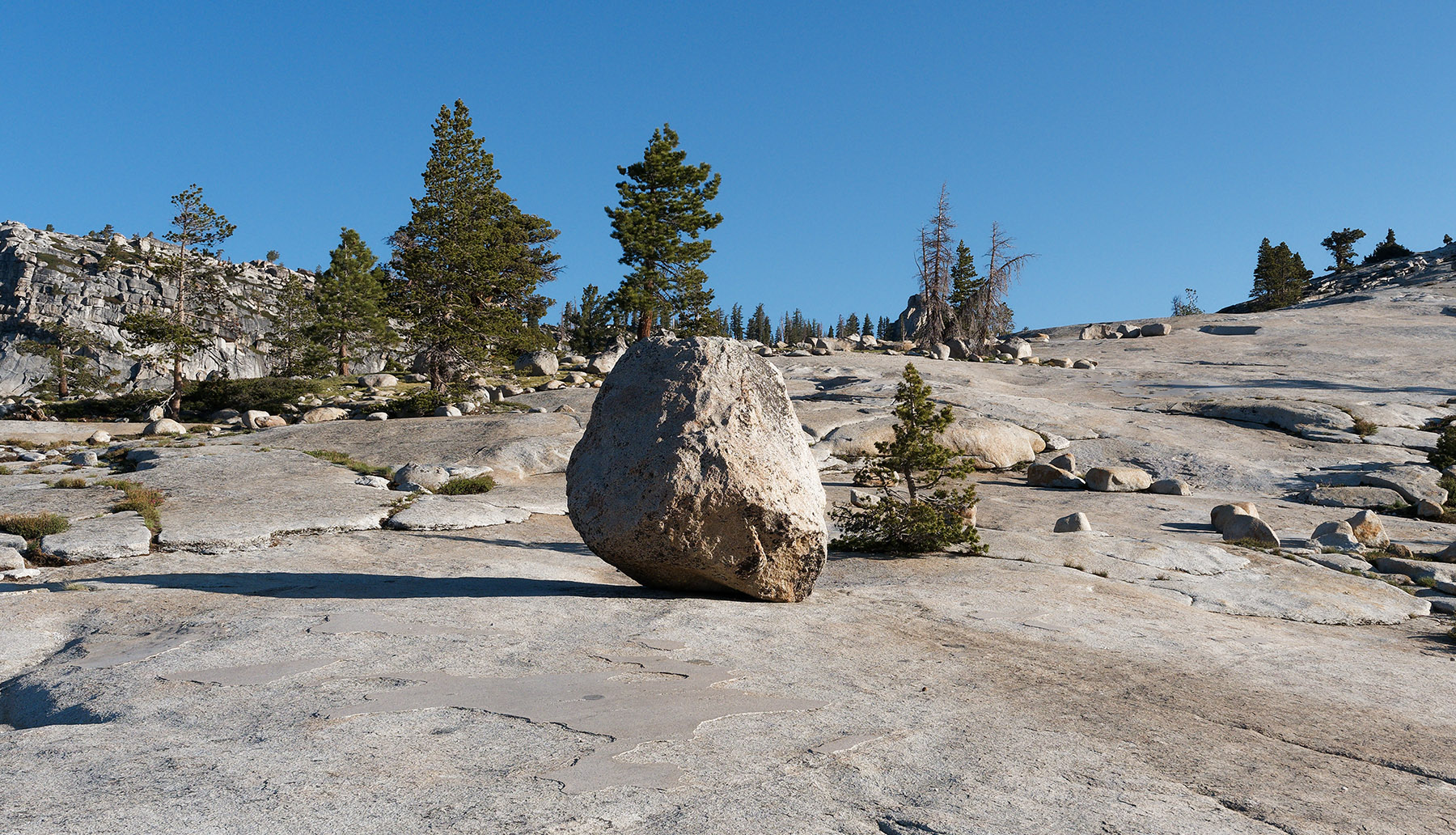 Granite glacial erratic boulder sitting on polished granite at Olmsted Point.
 Panorama of exposed granite batholith at Olmsted Point.
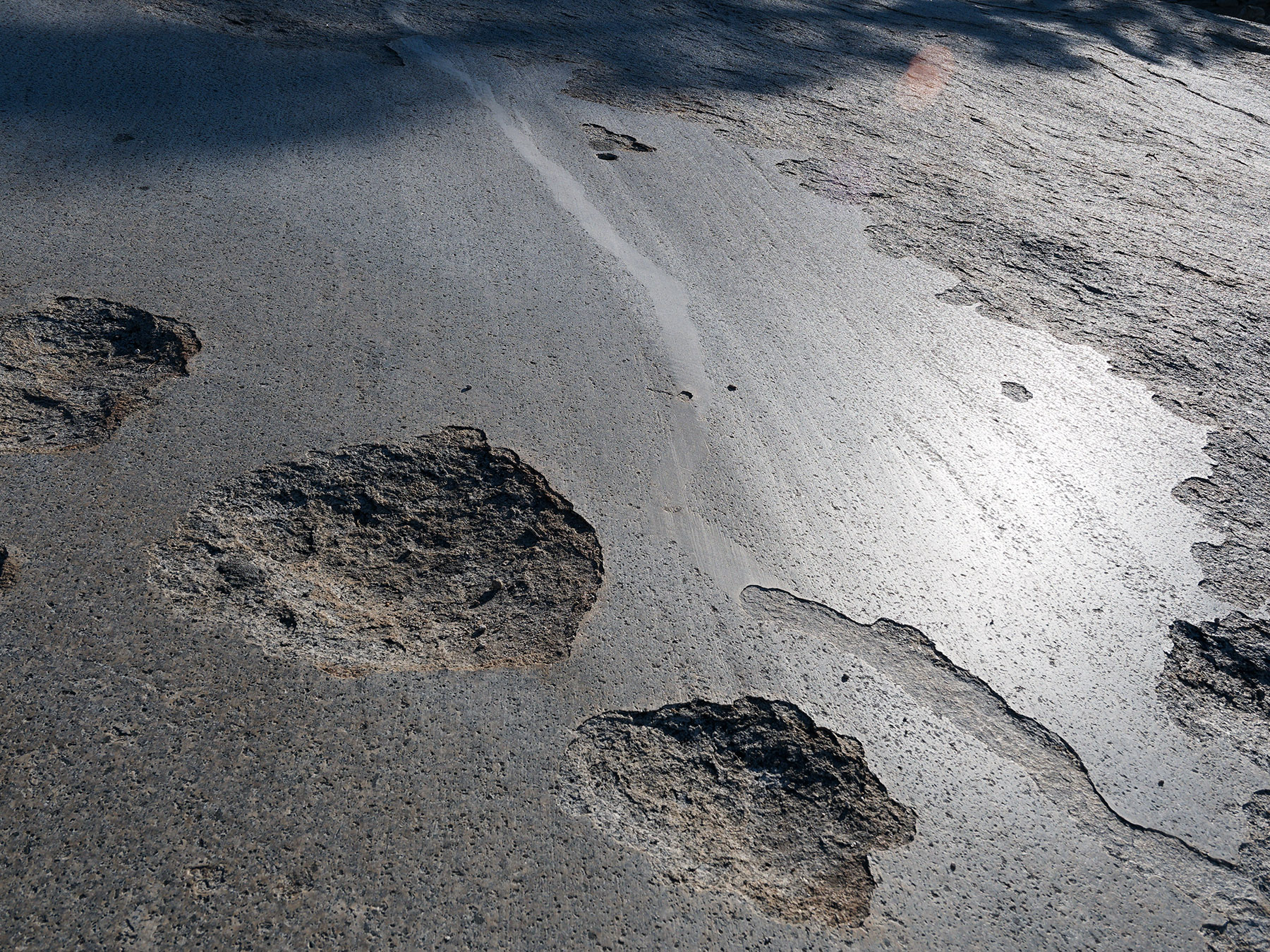 Granite glacial polishing and striations. Olmsted Point.
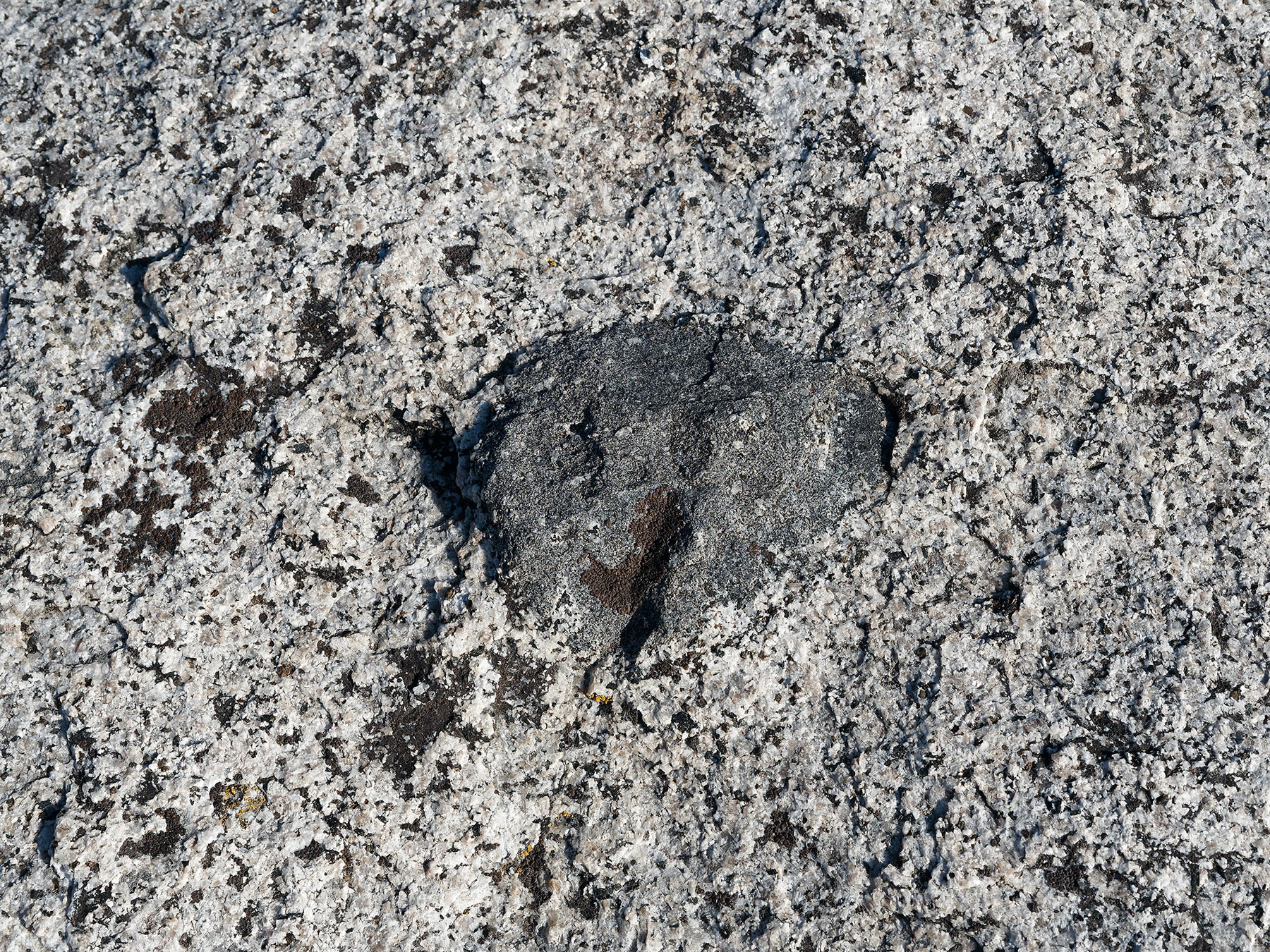 Dark inclusion in white granite (or diorite inclusion in granodiorite.) These are explained as partially-melted basalt or other rock bordering the main magma chamber where the granite batholith cooled. Olmsted Point
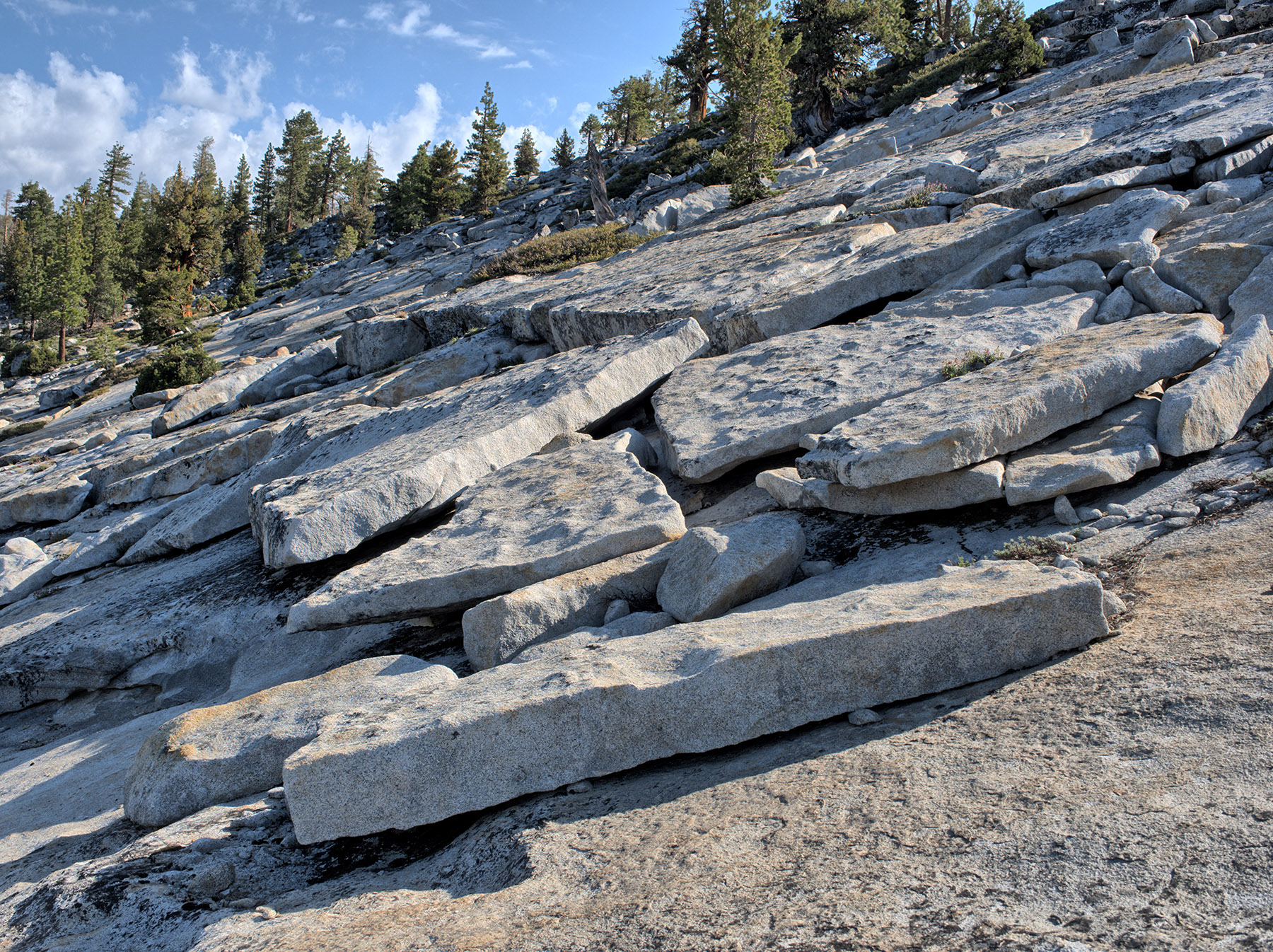 Exfoliated granite due to water and ice formation cleaving granite layers. Above Tioga Road west of the Yosemite Creek crossing.
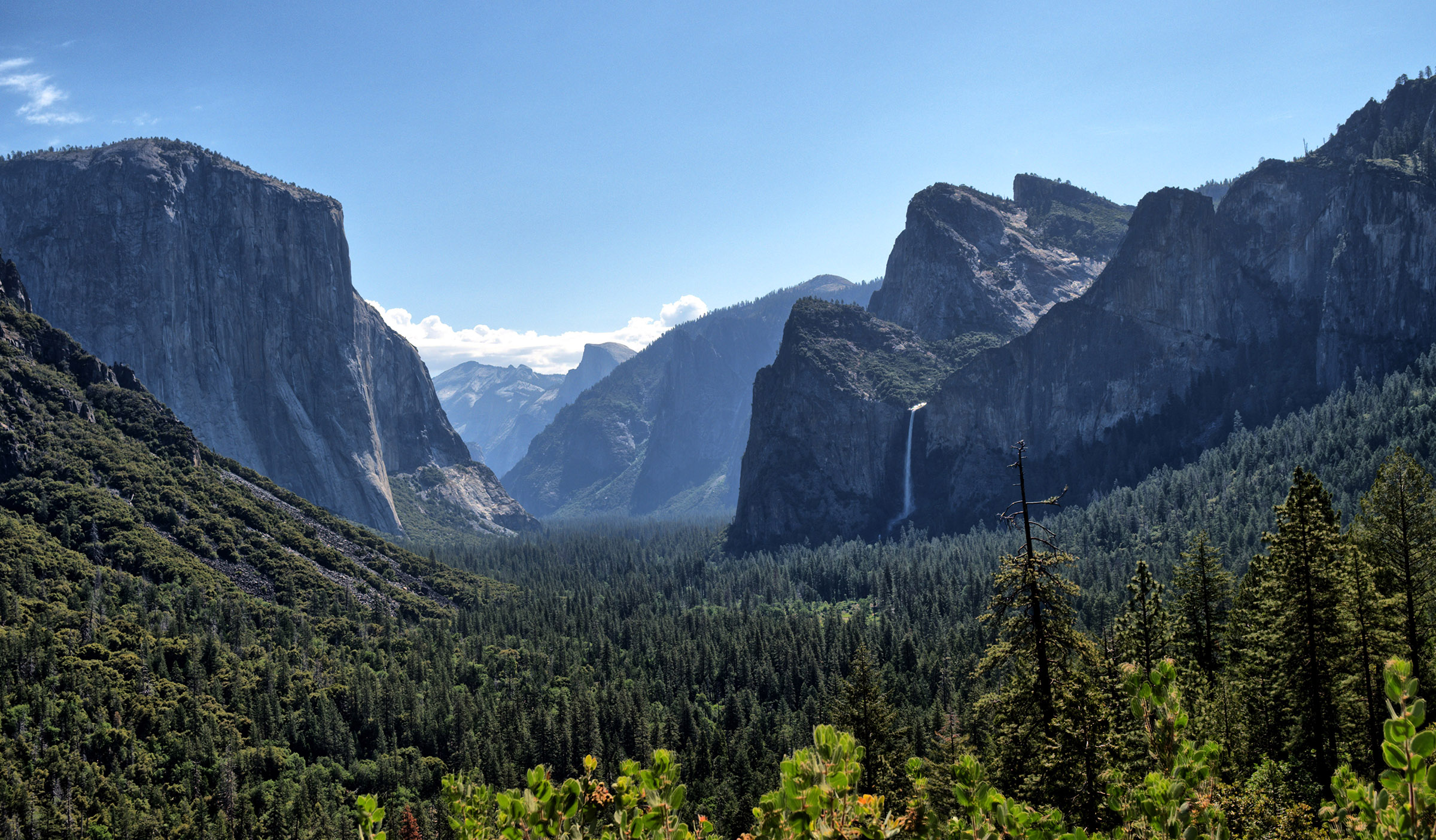 Yosemite Valley from Tunnel View Overlook. I stopped here driving out of Yosemite to join approximately 100 other visitors snapping photos from this viewpoint. I fled from the crowds visiting this glacially-carved and water-eroded batholith wonder.